What’s Actually Inside a Beehive? (Spoiler: It’s Not Just Honey)
- Genevieve Benson NiCheallachain

- Apr 4, 2025
- 2 min read
Updated: Apr 6, 2025

Peek inside a beehive, and you’re looking at one of nature’s most organized societies. Every bee has a role, and every inch of comb has a purpose.
🐝 The Queen
She’s larger than the others and surprisingly elusive. Once she mates (just once in her life, with up to 20 drones in mid-air), she spends the rest of her days laying eggs — as many as 2,000 a day during peak season. She emits pheromones that keep the hive unified and functioning.
🐝 Workers
They’re the backbone of the hive — and all of them are female. Over their 6-week life, a worker will:
Clean the hive
Feed larvae
Tend the queen
Produce wax and build comb
Guard the entrance
Forage for nectar, pollen, and water
She does it all… and then she dies of exhaustion.
🐝 Drones
Male bees have one job: mate with a virgin queen. That’s it. No stinger, no hive duties. If they don’t mate? They get kicked out of the hive before winter.
But a hive isn’t just bees. Inside, there’s:
Honey (stored nectar that bees use for food)
Brood (developing eggs, larvae, pupae)
Pollen stores (protein-rich fuel for baby bees)
Propolis (a resin used to seal cracks and disinfect)
Wax comb (hexagonal cells bees build to store it all)
It’s an entire self-sustaining universe in a box.
To recap the layout of the hive:
🐣 Brood chamber – Where the queen lays eggs and babies are raised.
🍯 Honey supers – Where honey is stored for the hive (and sometimes harvested by beekeepers).
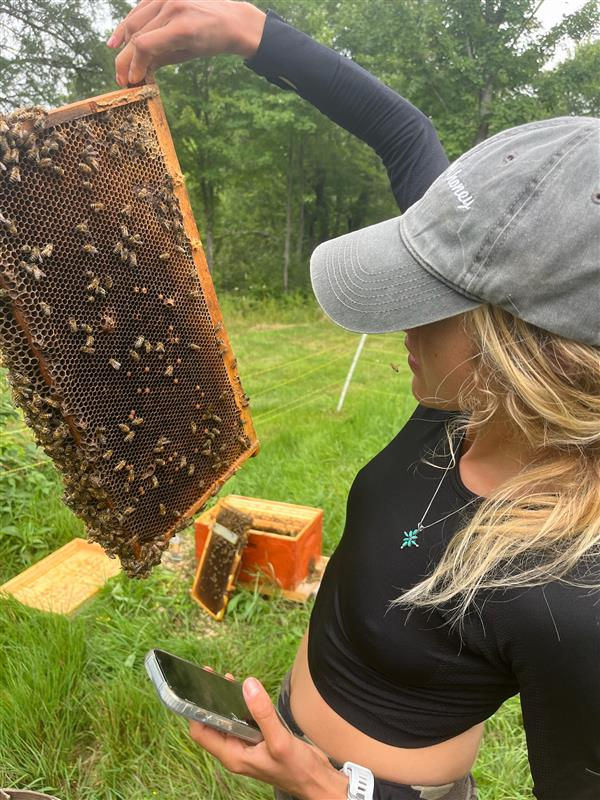
🐝 Frames – Wooden slats that bees build comb on — making it easy to inspect and manage.
Bees also regulate the temperature and humidity inside the hive. They fan their wings to cool things down, cluster together to stay warm, and seal up cracks with propolis (a sticky resin they collect from plants — nature’s duct tape).


Comments